To Learn, Protect and Cultivate.
Use these Learn, Protect, Cultivate icons throughout the website to navigate your Guardianship practice.

To observe the bee.
Bees, above all things love harmony, and many have observed, that in their Singing, Humming and Buzzing, they produce the notes of music in the most exact manner, keeping their Stops, Rings and Falls, and have something in their sounds that resemble each particular note used in Vocal and Instrumental Music, and are so attentive to Harmonious sounds, especially that are soft and sweet. They understand each other by Notes, and answer in harmonious strains, having as it were a sweet language among them.
- The History of Bees, Charles Butler
Defence of the city gates.
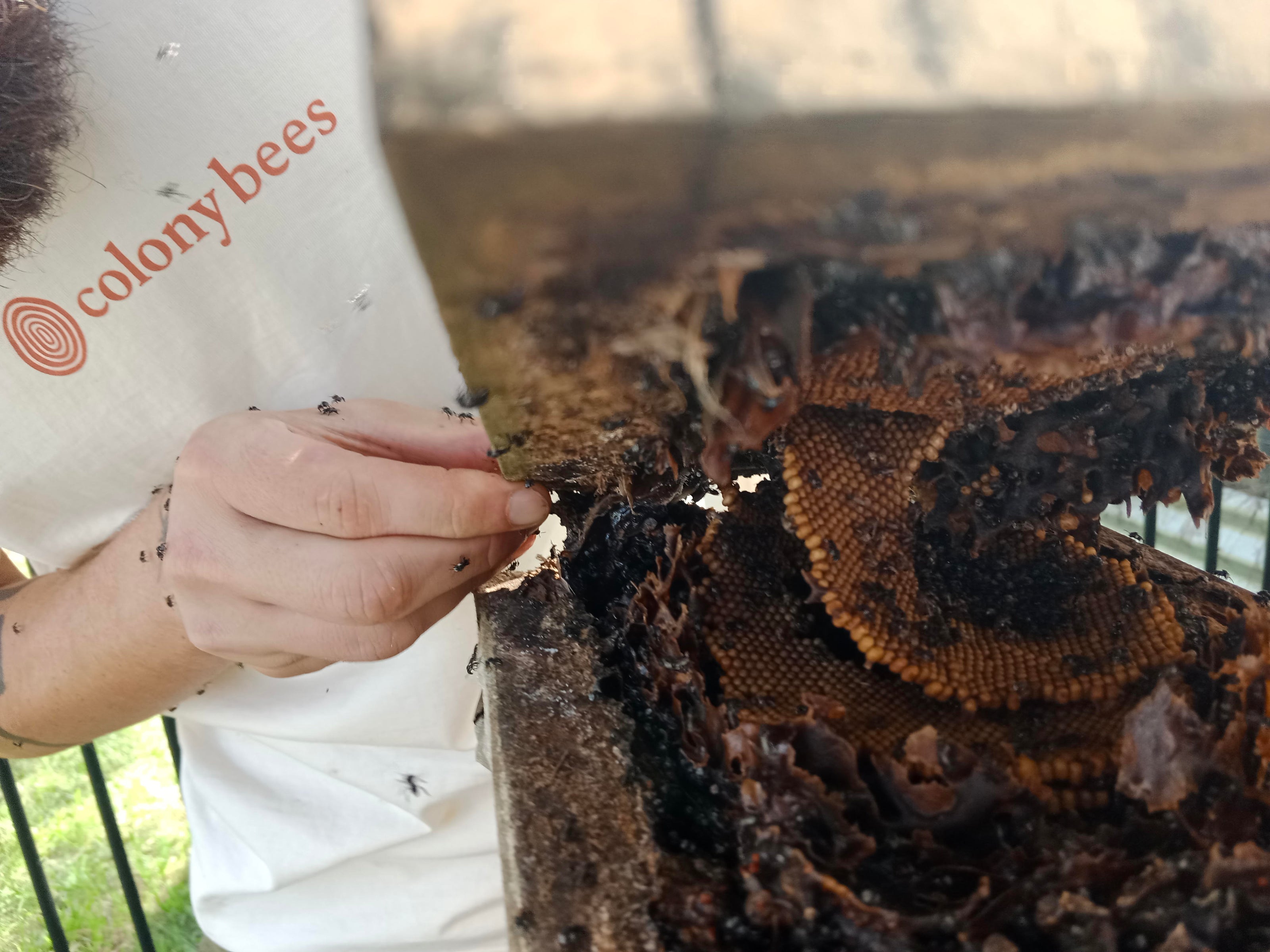
We guard trees with hollows provide animal homes. Hollow formation is a common trait in many Australian trees. At least 20% of bird species are hollow-dependent. All arboreal marsupials use tree hollows for shelter and breeding sites. Honeybee and Tetragonula Carbonaria stingless bees both use tree hollows to nest. Inside these hollows bees line the cavity with propolis.
"Propolis" comes from the Greek language and means "in defense of" (pro) the city (polis)." The essential meaning is "defender of the city. Propolis is used to reinforce structural stability, provide thermal insulation and makes the hive stronger in defence.
Propolis is comprised of 50% tree resins, 30% beeswax, 10% essential aromatic oils, 5% pollen, 5% other organic compounds. The main active ingredients in propolis are flavonoids which the honeybees get from plant and flower.
To nurture and care.
From colō (present infinitive colere)
1. To cultivate the land, till, tend, take care of.
2. To inhabit.
3. To frequent, be the guardian of, cherish, care for, protect and nurture.
4. To worship, honour, revere, give reverence to and respect.
Wild Honeybee
Wild Honeybees provide pollination for plants on country and provide hive medicines such as Sugarbag for our community.
Sanctuaries protect wild bees and guard their important ecological actions that help us to achieve objectives such as SDGs, the Paris Agreement and national agricultural pollination.
Research shows that wild native Honeybees display advanced genetics that are developed through swarming. This helps to deliver enhanced biodiversity through pollination.
Learn about the Wild Bees of Blenheim.